Applications of IoT Edge Computing
Industrial Automation and Manufacturing
In manufacturing and industrial settings, machines are often equipped with arrays of IoT sensors monitoring vibration, temperature, pressure, etc. Edge computing allows these systems to perform realtime analytics on the factory floor. For example, an edge controller on a production line can continuously analyze sensor data to ensure equipment is operating optimally and detect any anomalies or signs of wear before they lead to failures. This enables predictive maintenance – the machine can alert technicians or even automatically adjust operations at the first hint of a problem. If a robotic arm’s motor shows unusual vibration, an edge AI module could flag it and slow the robot down or take it offline for inspection, preventing an accident or costly downtime. Because the analysis happens locally, there’s no latency waiting for cloud processing, which is crucial for fast-moving production lines. Moreover, factories are leveraging edge computing for computer vision (quality inspection cameras detecting defects in milliseconds on the line) and digital twins (simulating equipment performance in real time at the edge) to optimize processes. These capabilities significantly improve yield and reduce waste, demonstrating why Industrial IoT (IIoT) is a major driver of edge adoption.
Smart Cities and Infrastructure
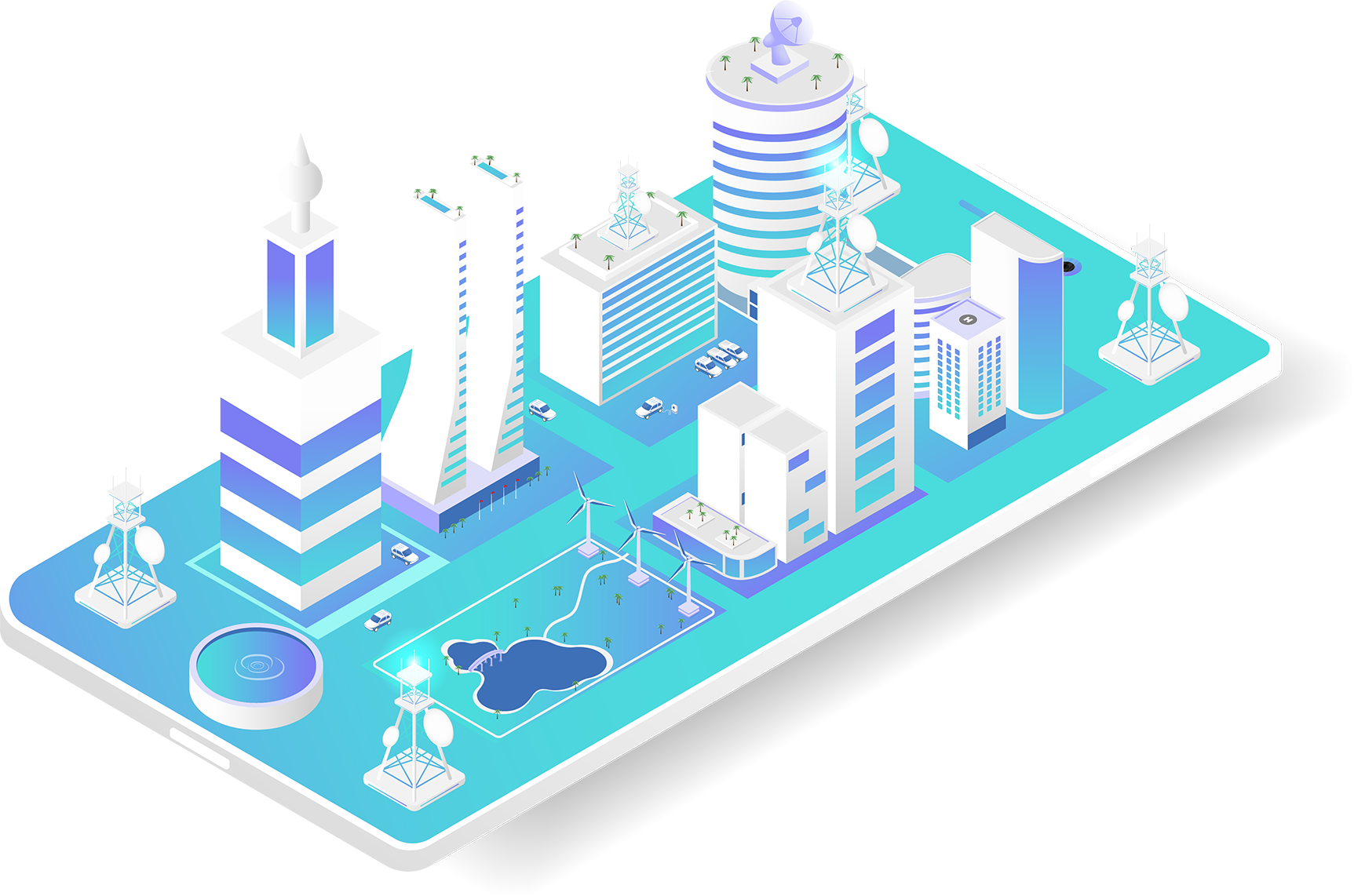
Urban infrastructure is getting smarter with IoT devices like traffic cameras, street light sensors, air quality monitors, and energy meters distributed throughout a city. Edge computing is crucial to handle this deluge of city data on-site for immediate action. Consider traffic management: cameras and sensors at an intersection can locally analyze traffic flow and adjust the traffic light timing in real time to alleviate congestion, instead of relying on a central system to make every decision. Similarly, edge-enabled surveillance systems can detect incidents or anomalies (e.g. identifying a stalled vehicle or a crowd forming) and alert authorities within seconds. In environmental monitoring, edge devices check conditions (water levels, pollution indices) and can trigger instant alerts or localized responses (like activating flood pumps or changing digital signage to warn citizens). A city-wide cloud system might still be used for long-term data aggregation and planning, but the immediate responsiveness comes from intelligence at the edge. This is also beneficial for bandwidth: one smart city project noted that sending raw video from hundreds of cameras to the cloud was impractical, so they used edge AI in each camera to report only events of interest. Edge computing in smart cities makes services like public transit, utilities, and emergency response more responsive and efficient. It also supports smart grids – local substations can balance power supply and demand on the fly based on sensor inputs, making the energy grid more resilient and efficient (and as a bonus, reducing carbon footprint by optimizing energy use ).
Healthcare and Wearables
Healthcare IoT devices, such as patient monitors, wearables, and smart medical equipment, generate continuous data that often requires immediate interpretation. In hospitals, for instance, edge computing is being used to analyze patient vital signs in real time. A portable patient monitor or a bedside edge device can track metrics like heart rate, blood pressure, and oxygen levels and instantly detect alarming patterns or anomalies. If a patient’s vitals indicate distress, the system can alert nurses or doctors on the spot, without waiting to send data to a cloud and back. This rapid response can be life-saving in critical care scenarios. Edge computing also helps maintain privacy here: sensitive health data can be processed within the hospital’s local network, with only necessary info sent to cloud systems for electronic health records. Telemedicine and remote patient monitoring devices (like smart glucose monitors or heart monitors patients wear at home) also leverage edge processing. The device can locally determine if readings are out of normal range and immediately notify the patient or physician. Beyond patient monitoring, consider imaging and diagnostics: an edge server in a clinic could run AI analyses on X-ray or MRI images right as they are taken, providing preliminary results to doctors within moments. Overall, edge IoT in healthcare improves responsiveness while keeping data close for security and compliance.
Autonomous Vehicles and Transportation
Autonomous vehicles (AVs), including self-driving cars, drones, and autonomous robots, are essentially IoT systems on wheels (or wings). They are equipped with numerous sensors (cameras, LiDAR, radar, GPS) that generate a flood of data about the vehicle’s surroundings each second. These systems absolutely require edge (on-board) computing to function. A self-driving car, for example, uses high-performance edge processors to fuse sensor data and run complex algorithms (like object detection and path planning) in real time as it drives. There’s no time to send sensor feeds to the cloud – by the time a cloud server analyzes the situation and sends back a decision, the car might have traveled dozens of meters. Instead, the car must locally compute and make split-second decisions (brake, steer, accelerate) with minimal latency. Tesla famously processes camera and radar data on-board its vehicles to enable features like automatic emergency braking and lane keeping within milliseconds . Edge computing in vehicles also reduces dependency on connectivity; this is critical because an autonomous vehicle cannot risk losing cellular connection and becoming “brain-dead.” Even connected vehicle systems (vehicle-to-vehicle or vehicle-to-infrastructure communications) often use local edge units at road intersections or in fleet management hubs to coordinate traffic and safety in real time. Beyond cars, drones use edge AI to navigate and avoid obstacles independently, and connected trains or ships may use on-board edge systems for navigation and equipment monitoring where network access is intermittent. In summary, edge computing is the “realtime intelligence” that enables autonomy in transportation, allowing vehicles to react instantly to their environment and carry out missions safely without human intervention
Retail and Smart Spaces
Retailers are adopting edge IoT solutions to enhance customer experiences and optimize operations in physical stores. Smart retail shelves and inventory sensors can automatically track product levels and item movements. An edge gateway in the store might aggregate signals from RFID tags or weight sensors on shelves to detect when an item is running low or if a misplaced product is in the wrong area, triggering staff alerts for restocking or reorganization in near real time. In cashier-less store concepts (like Amazon Go), dozens of ceiling cameras and sensors work together with edge AI to detect which products customers pick up and infer what to charge them, all in real time on-site to enable a seamless checkout-free experience. If this were done in the cloud, the latency and bandwidth needed for so many video streams would be impractical. Similarly, stores use foot-traffic sensors and smart cameras analyzed at the edge to understand customer flow through aisles and optimize store layouts or provide personalized digital signage instantly as shoppers move about. In logistics and warehouses (a close cousin of retail), edge computing is used with IoT scanners and conveyor sensors to manage package sorting at high speed. By processing scans and sensor triggers locally, packages can be rerouted or flagged on the fly without slowing down throughput. Edge-driven intelligence in retail and commerce leads to faster service, fewer stockouts, theft reduction, and data-driven insights in brick-and-mortar settings. One example case noted that in retail, “edge devices in stores manage real-time inventory and customer analytics… while cloud systems handle centralized inventory control and business intelligence” . This split ensures immediate actions can happen at the store level, with broader strategy and analysis in the cloud.
These examples only scratch the surface. Edge IoT computing is also transforming sectors like energy (with smart grid edge control as mentioned), agriculture (edge sensors and drones monitoring crops and adjusting irrigation in real time), telecommunications (5G base stations with edge computing for ultra-low latency services), and even aerospace. A striking example is NASA’s use of edge computing on the International Space Station: instead of sending raw experiment data down to Earth, they run experiments on an on-board “spaceborne” edge computer and send back results, accelerating insight from months to minutes . Overall, wherever there is a need for real-time, intelligent action based on sensor data, edge computing is likely playing a role.