Bluetooth Channel Sounding:
The Next Generation of Bluetooth Ranging

The latest in Bluetooth range-sensing technology, Bluetooth Channel Sounding leverages multiple mechanisms to achieve the greatest range accuracy yet for paired Bluetooth devices. The technique improves accuracy, down from the previous 3-5 meter range to potentially centimeter-level precision. 

range-illustration.png

New to Bluetooth Core 6.0: Channel Sounding

For years, Bluetooth has featured a variety of location and ranging solutions to serve proximity and distance-measurement applications: key fobs that allow you to unlock your car with a touch of the handle, doors that recognize authorized users, logistics tracking in warehouses, robotics navigation, and more. However, previous methods usually only provided accuracy within 3 to 5 meters. That was enough to determine proximity, but not enough for accurate positioning. 

In the Bluetooth Core 6.0 Specification, the Bluetooth Special Interest Group introduced Channel Sounding. According to the SIG, “The Bluetooth® Channel Sounding feature was designed to achieve centimeter-level accuracy with low power consumption, which means the accuracy of a distance measurement should be plus or minus tens of centimeters of the actual distance (even without line of sight), a dramatic improvement over that 3-5 meters of generations past. It does all of this with the lowest cost and power consumption and an enormous adoption potential via the countless Bluetooth devices proliferated across every environment. 

icon-bluetooth.png

How it Works

 According to the Bluetooth SIG, “Bluetooth® Channel Sounding uses two proven ranging methods, phase-based ranging (PBR) and round-trip time (RTT), to enable secure, fine ranging between Bluetooth connected devices.” In practice, these two techniques work hand in hand to double-validate the likely range between the sending and receiving device. Combining them creates a much more accurate range measurement than is possible with either alone, and using two or four antennas further improves readings. 

Read our blog for a more in-depth explanation of Bluetooth Channel Sounding.

(courtesy of the Bluetooth SIG)

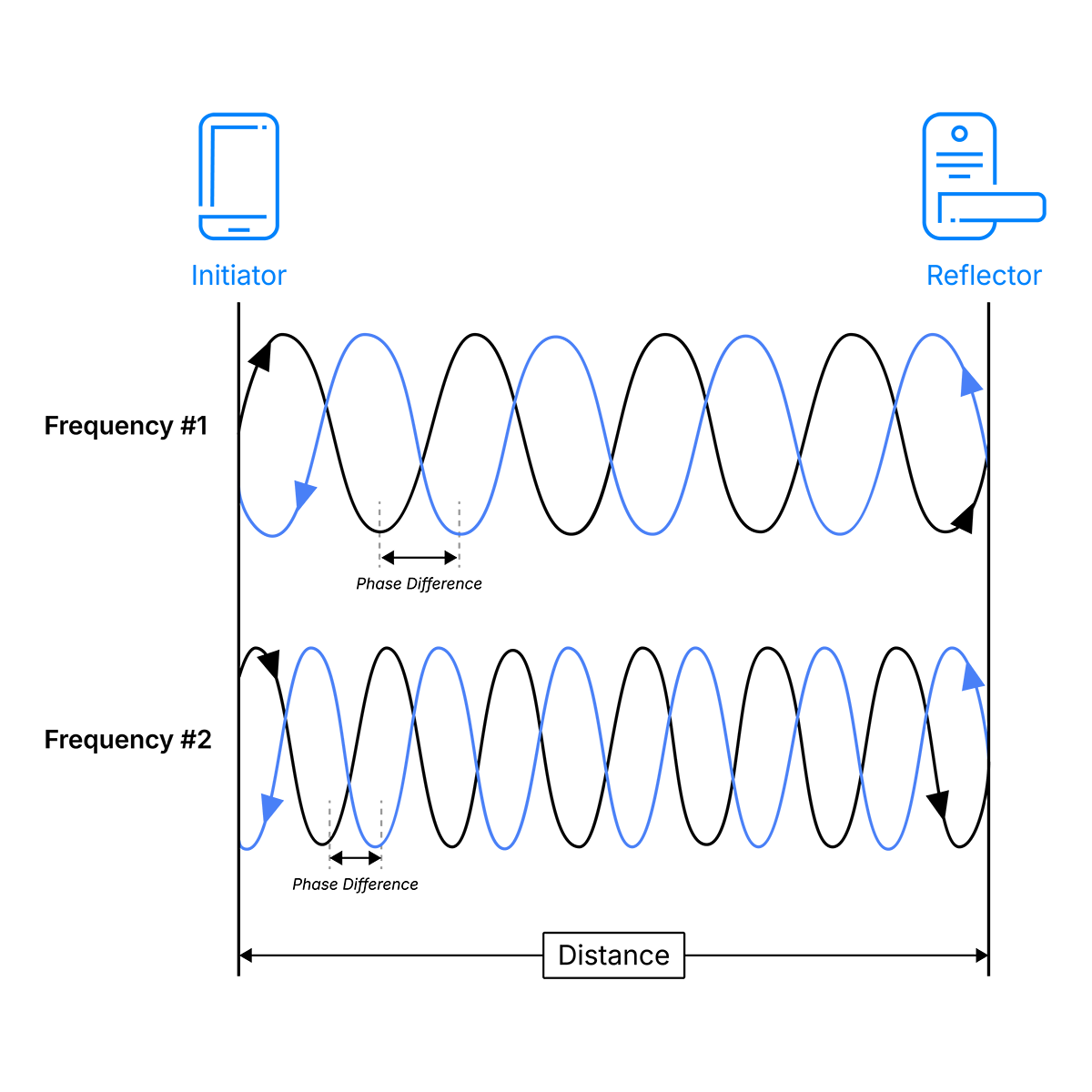
Phase-Based Ranging (PBR)

Phase-based ranging involves sending a message from an initiator to a reflector and measuring the phase of the signal received. This is repeated across multiple frequencies. Since the physical wavelength is known for each, the algorithm solves for the distance which satisfies the received data for all pings and delivers a likely distance.

CS_Phase_Based_Ranging_Update.png

(courtesy of the Bluetooth SIG)

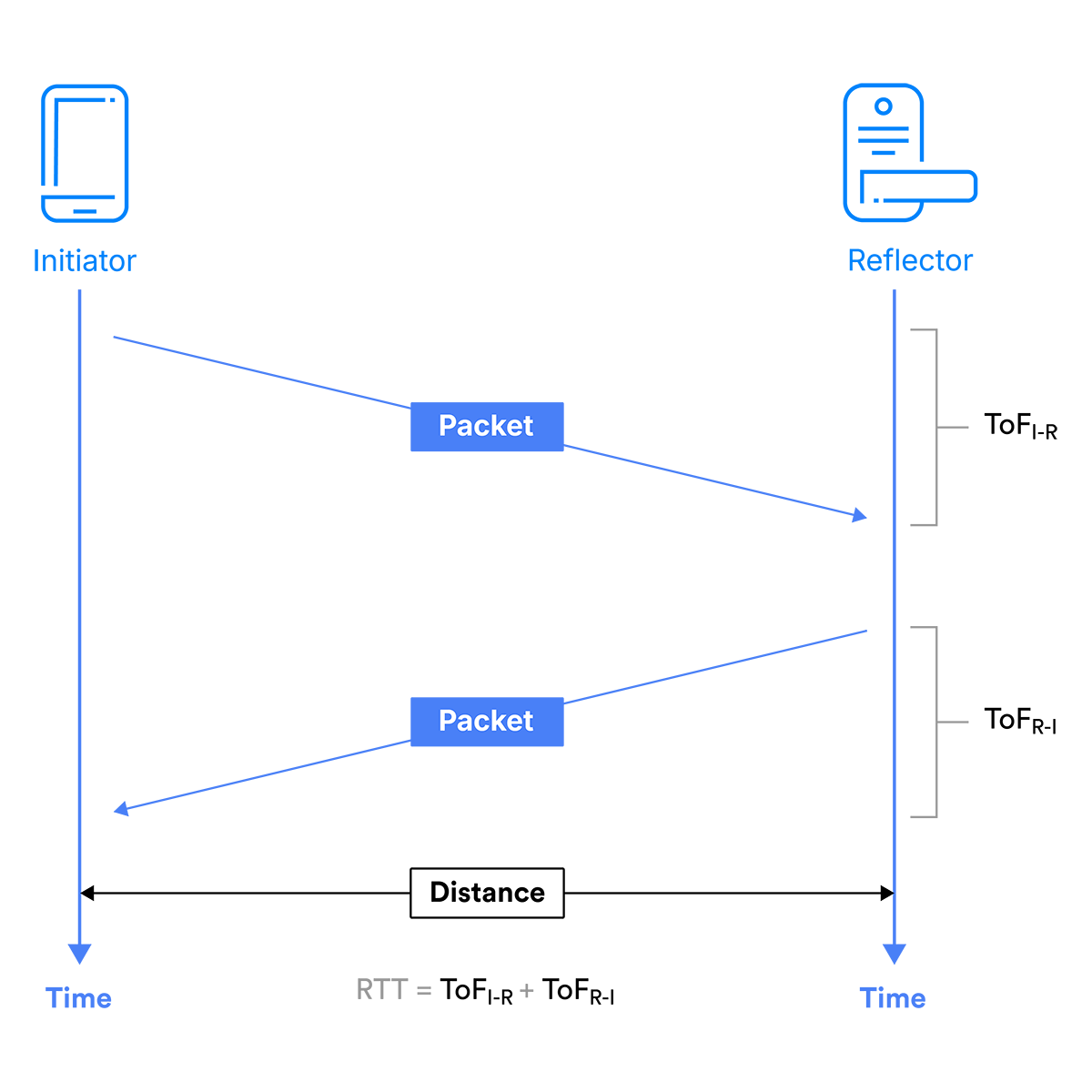
Round-Trip Time (RTT)

Round-Trip Time attempts to find distance by sending a cryptographically scrambled packet to a reflector, which then returns the packet to the initiator. In so doing, the amount to time over the air is used as a secondary estimation of distance and is also used to further validate the results of the Phase-Based Ranging pings, and helps combat Man in the Middle (MITM) attacks.

CS_Round_Trip_Time_Update.png

Key Advantages of Bluetooth Channel Sounding

Bluetooth Channel Sounding offers many benefits for developers of location applications.

Improved Accuracy

Among the most accurate wireless protocols for low-power location and ranging, with an accuracy of tens of cm, even over long range.
2 and 4 antenna configurations offer improved accuracy and resistance to reflections and multipath interference. 

Better Security

With redundancy checks and encrypted payloads, channel sounding protects against Man-in-the-Middle attacks and bolsters trust in location data. Normalized Attack Detector Metric (NADM) alertsthe application layer of conflicting locations and possible attacks.

Ubiquitous Hardware

Bluetooth is everywhere: laptops, handhelds, wearables, and more. Developers have access to an omnipresent array of companion devices. Only the initiator needs to run the location algorithm, so any Bluetooth LE device can participate in ranging. 

Our Partnerships

Ezurio works with software and hardware partners to put the power of Bluetooth Channel Sounding in our customers' hands, simplifying the integration of these new features and bringing our customers' designs to life. Our silicon and technology partners make it easier than ever to jump start your location-based design, with value-added software that allows you to rapidly evaluate location-based applications. 

Silicon Partners

Ezurio's Bluetooth offerings powered by Nordic Semiconductor give our customers access to the latest in Bluetooth features, with more chipset partners coming soon. 

nordic-square.png

onceLabs: Location Demo

Ezurio integrated onceLabs' BLE Hero application to give OEMs an out-of-the-box demo to conduct ranging between our Development Kits and any smartphone.

OnceLabs logo transparent.png

Metirionic: Stack / Evaluation

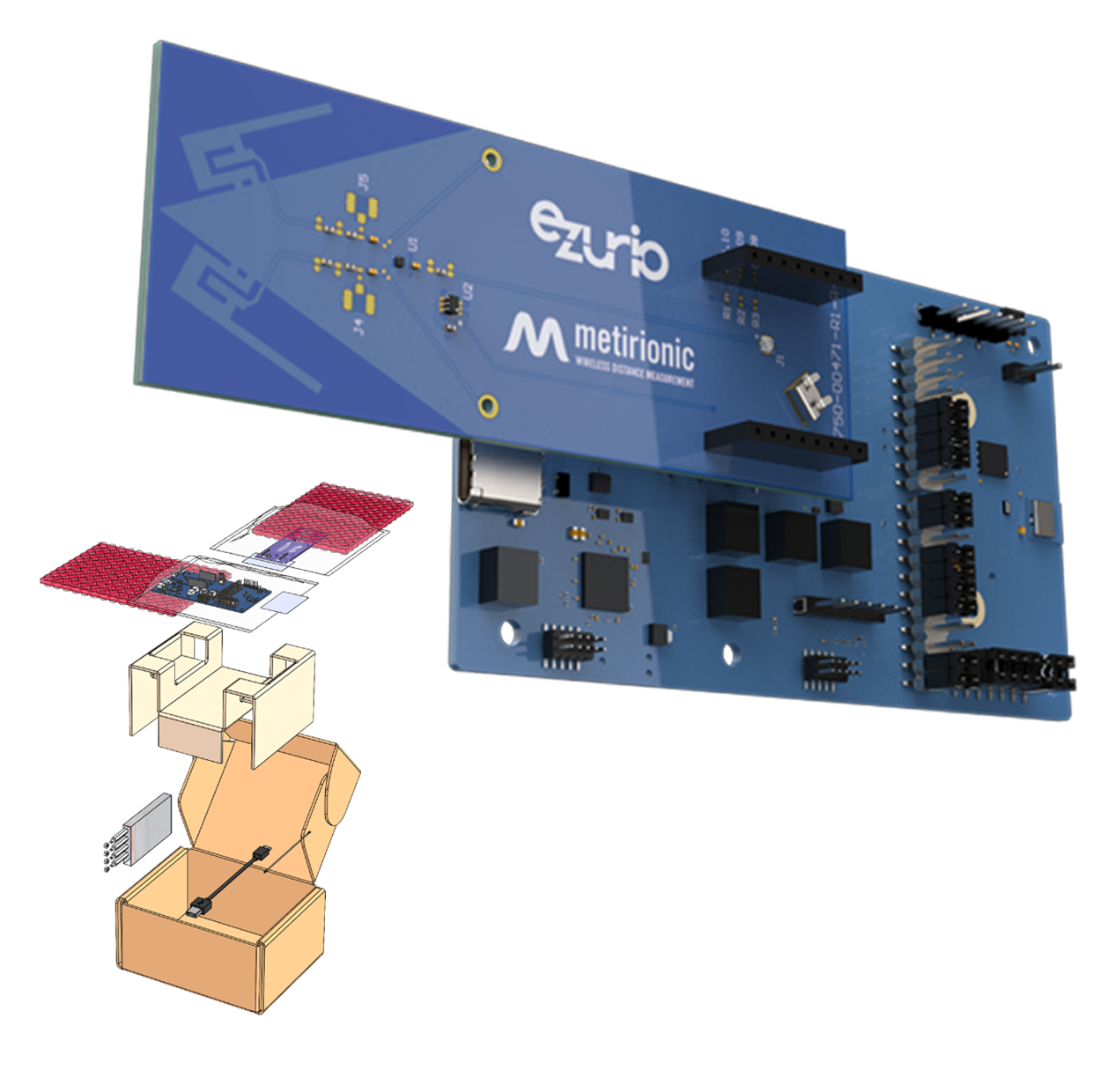
Ezurio offers Metirionic's MARS stack and expertly engineered Pathfinder algorithm for improved accuracy. Full evaluation supported with our BL54L15 DVK.

metirionic-logo - square

Modules with Bluetooth Channel Sounding

Our latest line of Bluetooth modules take advantage of the newest features in the Bluetooth Core 6.0 specification, including Bluetooth Channel Sounding.

BL54L10

Based on the nRF54L10 SoC

Learn More

BL54L10-Group.png

BL54L15

Based on the nRF54L15 SoC

Learn More

BL54L15-Group.png

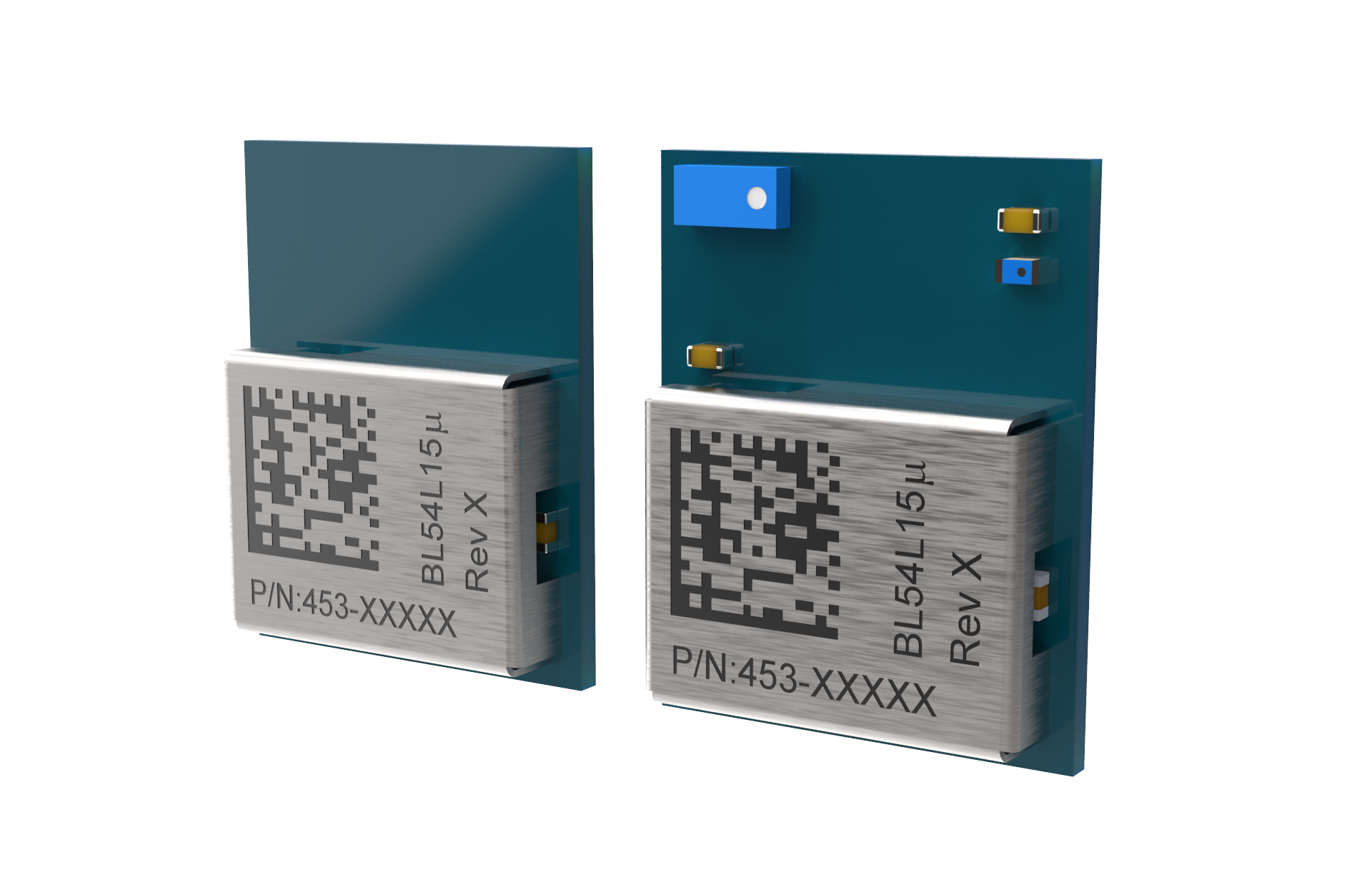
BL54L15μ

Based on the nRF54L15 SoC

Learn More

BL54L15ug_SA and ST-right11.363.png

Sample Applications: Range and Context

Bluetooth ranging is about more than measuring distance between relative positions. It also means bringing location-based context to your facilities and products, particularly when working with fixed-location access points. Channel Sounding is useful for door and building access, smart home automation, geofencing, pet tracking, device access control, asset tracking, wayfinding, and much more. 

The examples below illustrate how distance means context, and context enables smarter devices and environments. 

Smart Doors and Gates

Via Bluetooth, a vehicle can be detected many feet away, long before it's close enough to warrant opening a gate lock. As the vehicle approaches, Bluetooth Channel Sounding can be used to determine the location of the vehicle, and only open the gate when the vehicle is directly in front. This just-in-time behavior is only possible with an accurate measure of range between the two objects. 

Find My Device

In combination with AoA / AoD measurements, Channel Sounding can enable wayfinding and ranging to help find a device. A smartphone can ping a Bluetooth-enabled key fob to find its distance and relative direction, and provide directional wayfinding to the lost keyring. This concept can be extended to many other environments: factories, warehouses, hospitals, and much more.  

Device Access

For safety and security, devices in industrial or medical settings must be locked down for access only by authorized users. Rather than relying only on passcodes, a location-based system can determine that an authorized user is at a given console, HMI, service station, etc. In combination with existing logins, Channel Sounding provides a redundancy check to ensure only authorized users have access.   

About Ezurio

Ezurio is a global leader in wireless connectivity with a focus on industrial, medical, and audio IoT solutions. Formerly known as Laird Connectivity, we bring decades of experience, engineering expertise, and customer-first innovation to every module we design.

  • FCC, CE, IC, UKCA, RCM, Bluetooth SIG certified
  • Fast time-to-market with flexible integration
  • Proven field reliability and support for mass production

Ezurio_logo-Gray_Red.png