Choosing the Right Edge AI Platform: 6 Specs That Actually Matter

When building vision AI at the edge, specs like TOPS aren’t enough. Here are six platform features that determine real-world performance and scalability.

Published on January 22, 2026

Choosing the Right Edge AI Platform: 6 Specs That Actually Matter

When evaluating edge AI platforms for vision applications, comparisons often start and end with TOPS. While AI performance matters, vision systems succeed or fail based on the entire platform: camera support, image pipelines, performance, and how easily the system can be deployed and supported over time. 

For applications like object detection, monitoring, counting, defect inspection, and safety systems, picking the wrong platform can lead to redesigns and missed timelines. 

Below are six specifications that better predict whether an edge AI vision system will scale beyond a demo and work reliably in the field.

  1. Camera Interfaces
  2. Number of Cameras Supported
  3. ISP Availability
  4. Acceleration You Can Actually Use
  5. Sustained Performance
  6. Support

These six specifications are difficult to evaluate from datasheets alone. That’s why Ezurio created an Edge AI comparison table that highlights camera support, ISP availability, AI acceleration, and deployment readiness across supported platforms, making it easier to compare real-world capabilities side by side.

Learn more at www.ezurio.com/edge-ai

1. Camera Interfaces

Cameras are the foundation to any vision system. If the platform cannot support the required number of cameras, or the resolution and frame rates those cameras need, everything downstream becomes a workaround. When evaluating a platform, look for:

  • The right number of MIPI-CSI interfaces for the intended architecture
  • Clear support for multi-camera operation
  • Defined bandwidth per camera stream, not vague specifications 

These details determine whether additional cameras can be added later without redesigning the system.

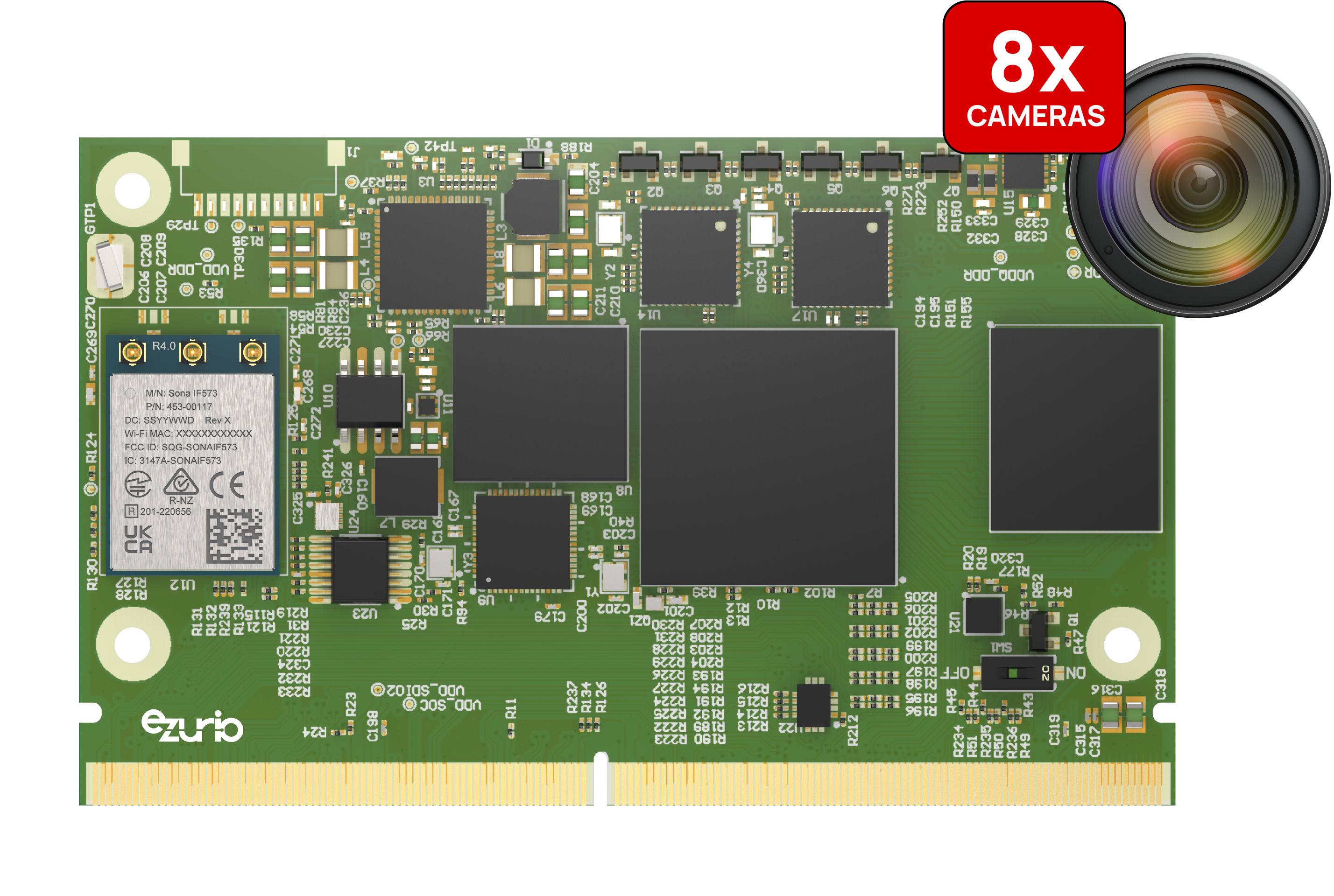
2. Number of Cameras Supported

“Number of cameras” is often misunderstood. It is not about how many sensors can be connected, but how many streams the platform can process reliably at the same time. Key questions to ask:

  • Can inference run across multiple camera streams concurrently?
  • Does performance degrade as streams are added?
  • Are there validated designs that demonstrate multi-camera operation? 

Vision systems rarely stay static. Platforms that scale poorly with additional streams quickly become bottlenecks.

8x cameras.png

3. ISP Availability

An Image Signal Processor (ISP) plays a critical role in vision quality and overall system efficiency. ISPs handle tasks such as color correction, noise reduction, and image scaling, reducing the load on the CPU and improving the consistency of inputs to AI models. For applications dealing with:

  • Variable lighting
  • Motion blur
  • Glare or reflections 

ISP support can make the difference between stable detection and inconsistent results. If image fidelity matters, ISP availability should be a priority.

4. Acceleration You Can Actually Use

TOPS only matters if your software can reach it. A strong AI accelerator is valuable only when paired with a supported and usable software stack. Evaluate:

  • Supported AI frameworks and toolchains (for example, NXP eIQ on NXP-based platforms)
  • Runtime compatibility, including model formats and quantization support
  • Fallback behavior when layers are not accelerated

Without this alignment, systems end up running partially on the CPU, reducing performance and increasing power consumption.

5. Support

The real cost of edge AI often appears after the demo phase. Updates, security patching, lifecycle management, and long-term availability all affect whether a product succeeds in the field. Before committing to a platform, understand: 

  • Who provides validated BSP and driver support
  • What the update and lifecycle strategy looks like 
  • How integration is handled if requirements change 

These factors directly impact time to market and long-term product stability.

ezchat-multiline-support.png

6. Sustained Performance

A platform that performs well for a short benchmark run is not necessarily suitable for production. Vision workloads often run continuously for hours or days. Production-ready platforms should demonstrate:

  • Thermal headroom under sustained load
  • Stable frame rates over time
  • Predictable and consistent latency 

This matters most in environments where downtime, dropped frames, or delayed decisions have real consequences.

Why This Matters and Where Ezurio Fits

Selecting an edge AI platform is not just about hardware capability, it’s about how quickly and confidently teams can move from evaluation to deployment. 

Camera selection and integration are often one of the biggest sources of delay in vision projects. Different sensors, drivers, and ISP implementations can force teams to rework software each time requirements change. 

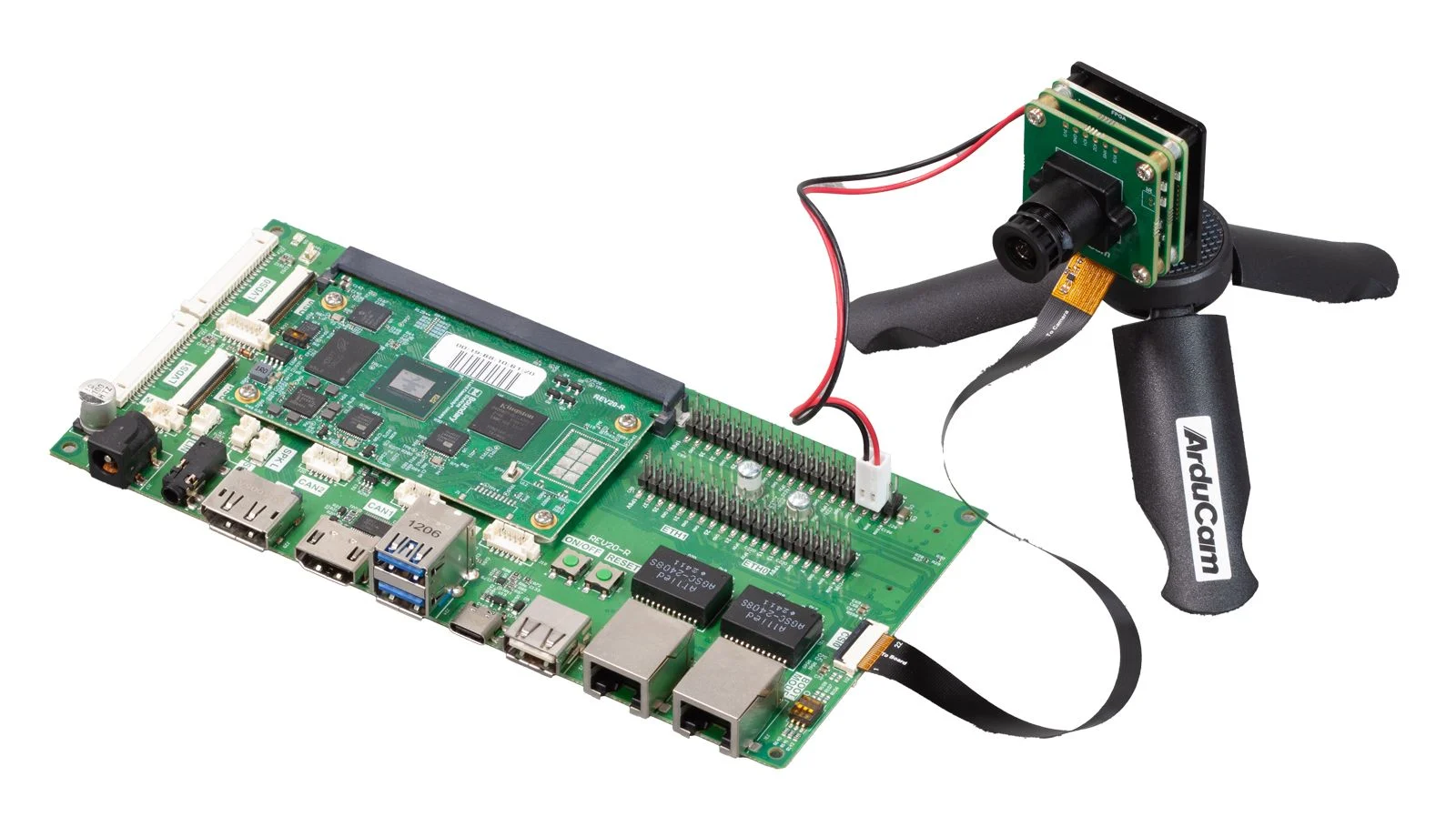
To reduce this friction, Ezurio partners with Arducam, a leader in embedded vision solutions. Arducam’s xISP camera modules use a standardized driver and ISP interface, allowing developers to evaluate and swap between cameras without rewriting software. Combined with plug-and-play hardware adapters and BSP-level integration, this approach removes much of the trial-and-error typically associated with camera selection. 

Alongside Ezurio’s Connected SOMs, this system-level integration helps teams prototype faster, scale more easily, and reduce risk as vision requirements evolve. 

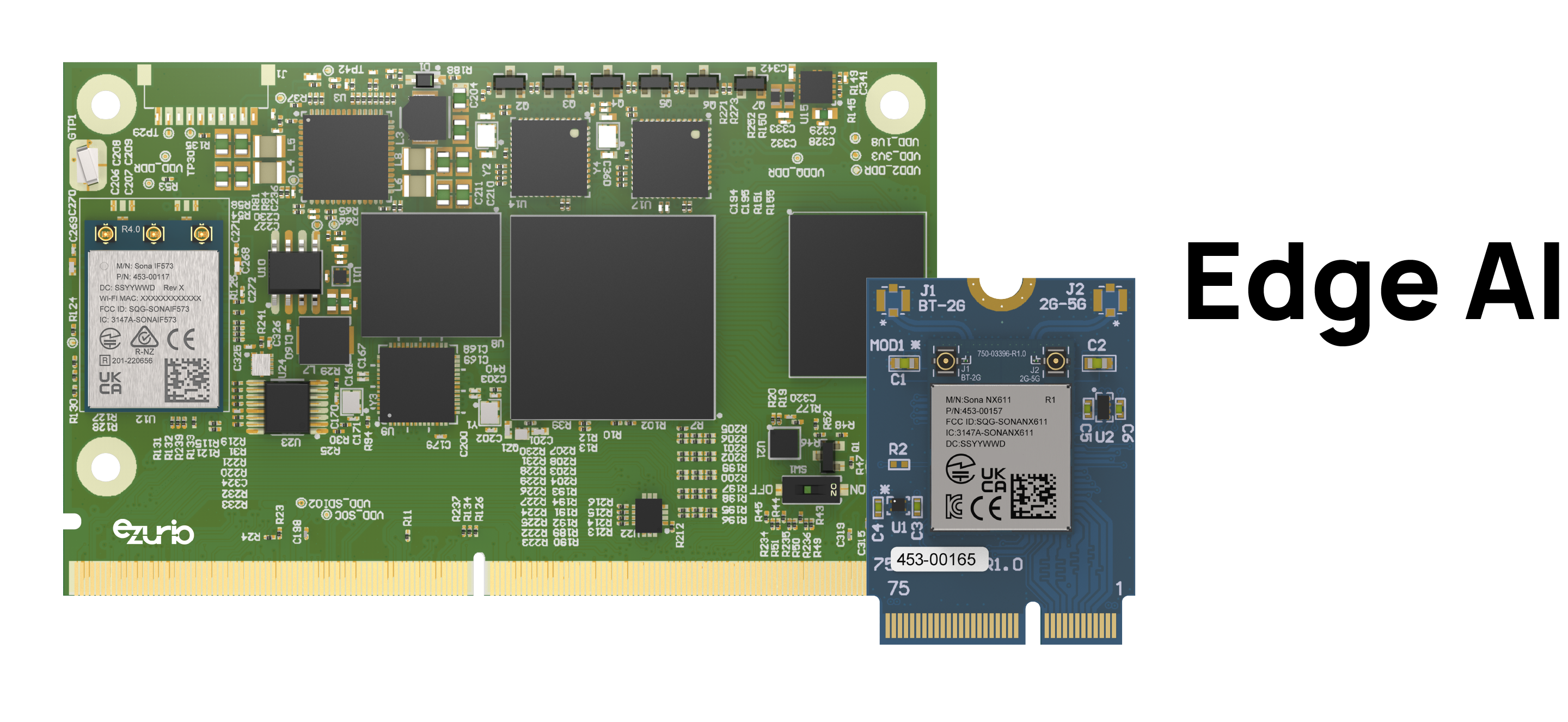
A Connected SOM combines the application processor and Wi-Fi from a single, trusted vendor, eliminating the complexity of sourcing, validating, and supporting connectivity separately. Ezurio enables customers to mix and match Wi-Fi 6 and 6E options with supported SOMs—leveraging pre-certified radios, proven integration expertise, and long-term support to select the right wireless solution for each application.
arducam logoArducam Nitrogen95 EVK

When standard platforms are not enough, Ezurio goes further by offering custom SOM and SBC designs tailored to specific camera counts, I/O requirements, power constraints, or mechanical needs. This flexibility allows teams to adapt their platform as requirements change, without starting from scratch. No other supplier offers this combination of connected SOMs, wireless choice, and custom platform capability to support edge AI systems from prototype through production.

Choosing an edge AI platform for vision is not about chasing the highest TOPS number. It’s about selecting a system that supports cameras, scales with real workloads, and remains reliable long after deployment. 

By focusing on platform-level requirements and partnering with a supplier that understands compute, connectivity, and lifecycle support, teams can avoid redesigns, shorten development timelines, and deploy vision systems with confidence. 

Click Here to Talk to Ezurio About Your Vision Application

Nitrogen95 EVK- Right.png