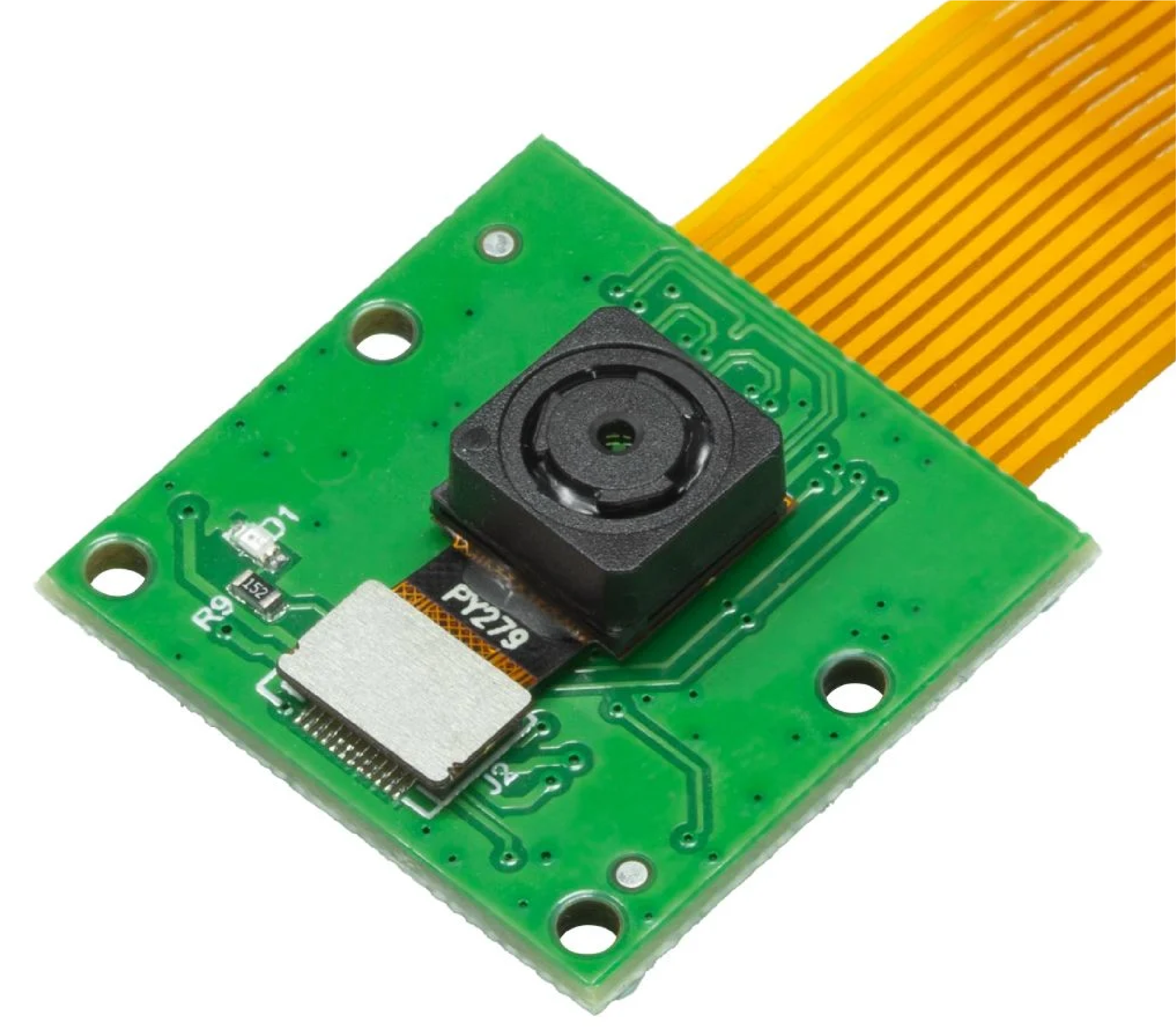
However, as tech improves, it’s now possible to do much more with a simpler solution: camera vision systems. Some key factors have changed the game for vision systems. Enhanced speed, performance, and accessibility mean they now meet the demands of real-time industrial applications once reserved for other sensor technologies
In this post, we’ll look at a few major changes in the increasingly improving field of embedded cameras, how the tech has leapfrogged previous alternatives, and the potential unlocked by these advancements.
Significant Improvements Yield Superior Results
There are multiple factors that have led to an increase in vision system deployments. In short, they’re the result of continued miniaturization and economies of scale that make them more practical to add to a hardware bill. But it’s more than that as well. Some changes in the camera landscape include:
- Artificial Intelligence can significantly improve the raw performance of image recognition. New algorithms transform our old ways of solving image recognition problems in vision systems. Today, it’s easier to do much more with much less in a camera module. Today’s advanced AI systems make it possible to achieve much higher reliability, even with much lower grade cameras. This makes it easier to argue in favor of adding a vision solution to your design and allows cameras to be used in many more places than previously possible.
- AI-based inference models can detect defects, classify products, and identify safety hazards in milliseconds, even in bad lighting and conditions. This allows embedded vision systems to replace multiple single purpose sensors while still delivering data for analytics and automation.
- The baseline for camera image quality has also risen, making lower budget camera solutions more effective. Continuous innovation and development of camera technology has dropped the base investment in a vision solution to a much more approachable point, which has manufacturers thinking about what they can do with vision systems that was previously out of the question. Today, it’s common to find industrial-grade camera modules with over 5 megapixels for under $150, making it far easier for manufacturers to add high-quality vision without the high price tag.
- Increased computational capability in edge processing means much more rapid analysis and decision making is possible right on the device. Where image analysis often needed to be performed on more powerful hardware on a secondary server or in the cloud, edge computing is making it more favorable to perform more data processing on the device itself – in addition to the proliferation of AI coprocessors in more vendor offerings.
All these factors combine to make vision systems a more effective integration than they were previously, and many manufacturers have taken notice. The bottom line is that image data has become a better tool than some of the previous incumbents and can see farther and more completely than alternatives. With AI and data processing dramatically speeding up the reaction time capable with camera imagery, what seems like the obvious choice is finally also the most practical one.
Where are Cameras Being Used?
One of the things that naturally follows from improved camera effectiveness is that they’re used in more places than ever before. They are replacing older sensor solutions and manual inspections, from facial recognition for access control to product defect detection in high-speed manufacturing.
Additionally, there’s a better and more reliable way to manage quality control with vision-based product inspection. The subtle differences which might be very easy for an inspector to miss become much easier with an AI-assisted vision system. In fact, slight drifts in product specifications are much easier to observe with a trained AI. Details which might be imperceptible to a person become immediate flags for a machine trained on the desired outputs.
A high-resolution image from a camera sensor can replace multiple other sensors, especially when trying to measure and validate these outputs. In manufacturing, a more affordable and faster camera is a sensor you can deploy in more places with less impact to your operational costs. That means that more measurements can be taken in more places, catching manufacturing errors earlier in the process. This early detection also enables predictive maintenance, allowing operators to schedule repairs before failures occur, reducing unplanned downtime.
Companies Are Taking Notice, and Vision Systems are Expanding
As previously discussed, vision systems are not only becoming more accessible at a lower cost, but they capture much more information than previous sensor types. So what does this mean for your next iteration of product designs?
For one, it means that OEMs cannot afford to ignore the possibilities that vision systems are unlocking in industrial designs. With integrated vision processing, machinery has access to a complete view of its environment, and possibilities for IoT sense and control open dramatically. Rather than just gathering abstract information about proximity to other objects, a vision system can identify a whole environment and make more complete assessments than simply detecting obstacles or approximating location. The actions that systems can take are limited only by your ability to algorithmically detect, measure, and assess the environment with AI-assisted image processing.
This is the beginning of a trend, which is precisely why it’s important to assess what information is available to you in the environments where your devices operate.OEMs that integrate vision now will capture better datasets, enhance automation, and outpace competitors who still rely on siloed sensors and manual inspections. . It’s a major differentiator with big implications for the total volume of analytics that you can gather in your operational environments. The possibilities are endless for improved automation, predictive maintenance, quality control.
Our Solution: An Ideal Partnership for Data Processing of an Advanced Image Pipeline
The actual work of building out an effective image signal processing pipeline and integrating that into your hardware is one of the most technically demanding parts of embedded product development. That’s why Ezurio has already laid the groundwork for a complete solution with our partners at Arducam. They’re a leader in embedded vision systems, known for delivering high-quality xISP camera modules that share a unified software interface.
We’ve worked to support their entire xISP series into our line of SMARC SOMs, giving you complete control over both the base hardware platform and the camera of your choice. All the xISP cameras share a unified image signal processor and driver, so if your needs change, there’s no rework or delays in integrating a different camera. The same applies to our SMARC SOMs – if your design requires an upgrade to a new chipset for greater processor performance, simply integrate your existing camera solution to another compatible SMARC SOM. They also feature onboard Neural Processing Units that are suited for these vision system requirements.
Ezurio has you covered for this design and the next, with world-class support, pre-integrated BSPs and validated drivers that take the guesswork out of developing for integrated vision. For more information on our partnership with Arducam, please visit:
https://www.ezurio.com/partners/technology/arducam
For more on our line of system-on-modules, including our SMARC modules, please visit:
https://www.ezurio.com/system-on-module