/filters:background_color(white)/2024-01/BL54L15-Group.png)
BL54L15
Ideal for next-gen low-power wireless products, built for secure Bluetooth LE 6.2 and 802.15.4 with dual-core processing and up to +7 dBm transmit power.
Ezurio is always looking toward the future of wireless – as a member of the Bluetooth SIG and as an advocate for our customers. Here’s what we learned about Shorter Connection Interval (SCI) in Bluetooth 6.2.
By Scott Lederer
Published on May 11, 2026
Today’s Bluetooth devices serve applications that could not have been dreamt of when the first Bluetooth headset was revealed in 1999. Brand new to the scene, Bluetooth served a single purpose: wireless audio in the personal area network with easy connection and reliable service. Today, there is virtually no use case that cannot be serviced by Bluetooth, thanks in large part to the Bluetooth Low Energy specification. Bluetooth LE took the already mature ecosystem of Bluetooth devices and profiles and created a parallel, low-power framework to serve many of those same needs. It opened the door even further to total Bluetooth ubiquity in personal area networking, and has only become more efficient and more reliable with continued updates to the Bluetooth Core Specification.
At Ezurio, we monitor and participate in the leading edge of the technologies we provide, and this brings us to what’s coming next for Bluetooth. The Bluetooth Core Specification 6.2 was released in November 2025, with a number of critical enhancements outlined. In the Bluetooth SIG’s own words, they are:
For this post, we’re mostly focused on the Shorter Connection Intervals feature. Ultra-low latency isn’t necessary in every application. But for those where it is important, it’s critical. Whether it’s simply the responsiveness of a Bluetooth mouse or the urgent beacon of a safety sensor, in some use cases timing is everything.
We wanted to validate and test SCI to give our customers a real world look at these performance claims and to measure actual latency. The connection interval minimum of 375µs doesn’t mean 375 µs latency in the application, and results can often be theoretical and dependent upon methodology and implementation.
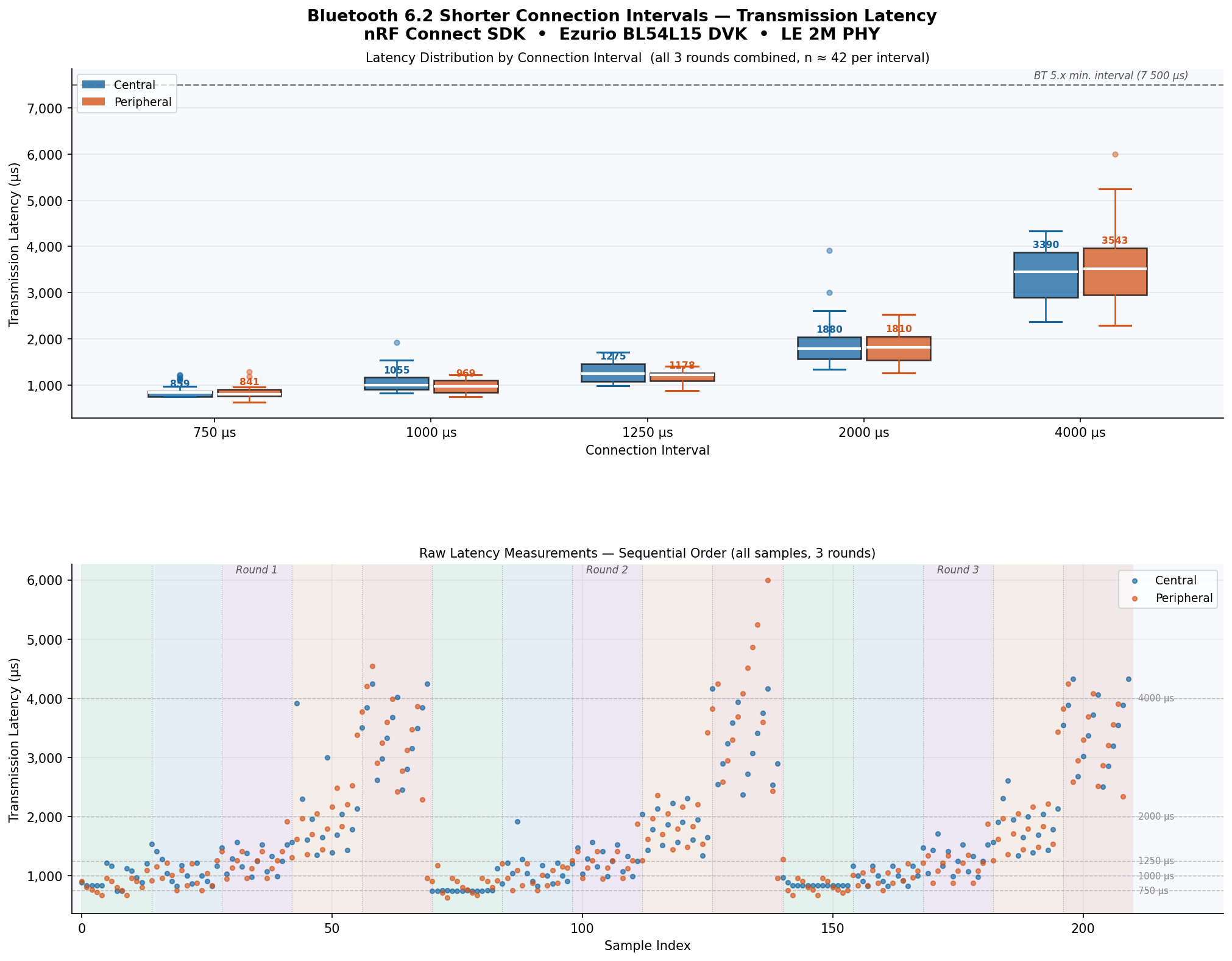
Ezurio staff engineer Scott Lederer designed two tests using two of our BL54L15 DVKs, separated by a two meter distance. The first test captured the results of running the shorter_connection_intervals sample script provided with Nordic’s nRF Connect SDK. The second test captures rising-edge timing of a GPIO pin toggling on each board, driven by BLE GATT messaging. We’ve published the results here, so you can see our full method and details.
The quick takeaway? Consistently, latency tracked very closely with the configured connection interval. Wider intervals yielded more variability, but low intervals brought latency to approximately 15% of the configured interval. That means with 750 µs latency configured, mean latency was actually below 860 µs on both devices. In testing of the rising-edge timing of a GPIO pin provided similar results.
However, there is much more to this story, and we highly encourage you to review our test results to understand the performance of this feature, and especially the deviation you can expect across multiple configurations. There are scenarios that can lead to much worse latency due to the impact of possible missed connection events. The configured 750 µs is optimal, but we found that 1000 µs may be more stable if 750 µs proves too aggressive for your application.
There is lots to consider here about the ideal implementation of this feature, which is why Ezurio tests and considers a wide range of scenarios to advise and assist our customers. We’re your connectivity expert, with the expertise in design and testing to create best practices and winning strategies in the applications we support.
Read our application note to learn more. For more information on our BL54L15 series, please visit our website:
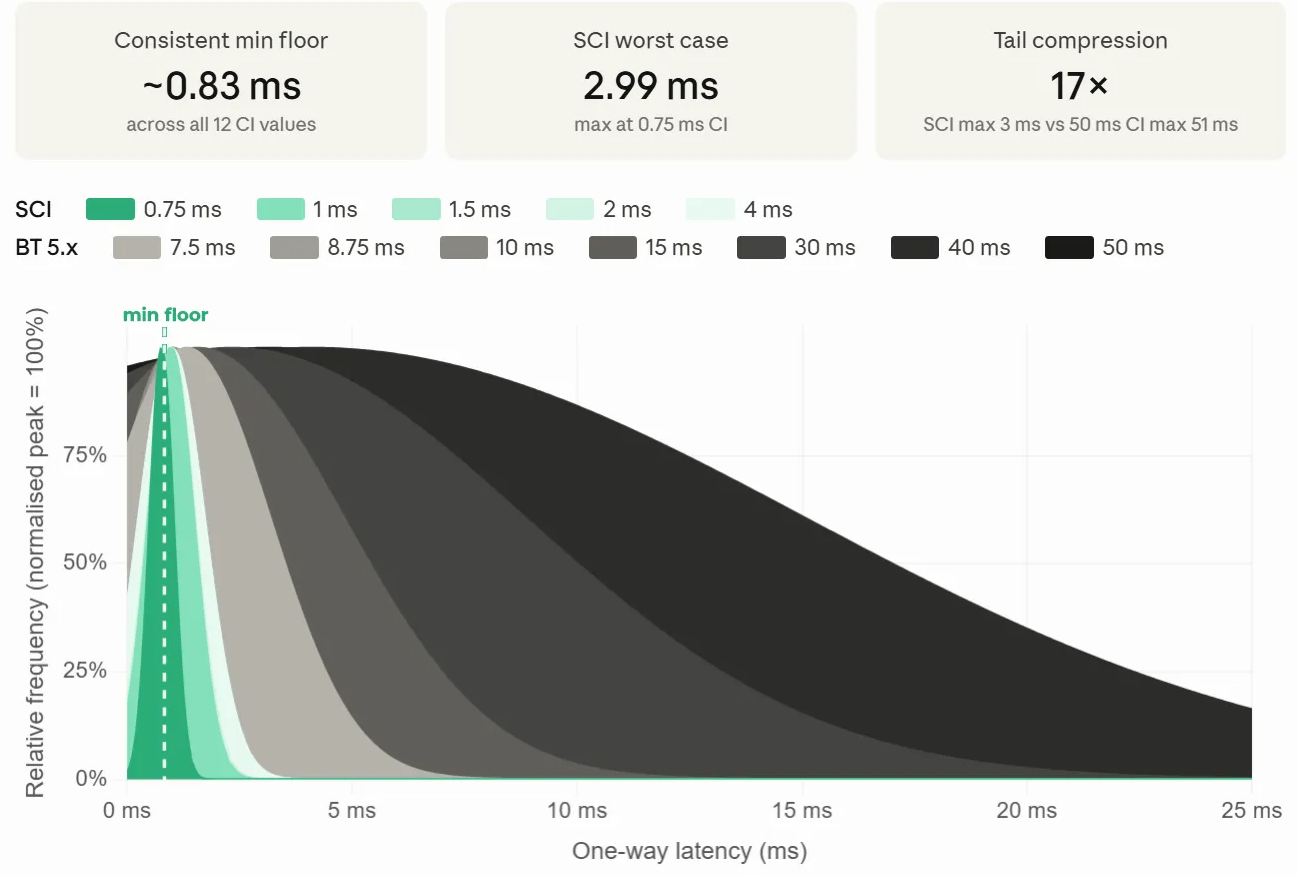
Ideal for next-gen low-power wireless products, built for secure Bluetooth LE 6.2 and 802.15.4 with dual-core processing and up to +7 dBm transmit power.